|
Editor’s Note: Castrovalva is the second of three Doctor Who adventures included in the New Beginnings box set, the other two being The Keeper of Traken and Logopolis.
 |
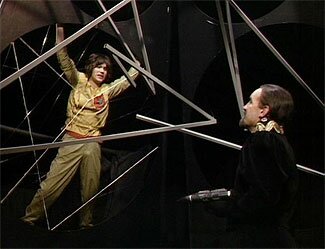
Though Peter Davison made his debut as the Doctor in Castrovalva, the adventure was actually the fourth one filmed in 1981. Starting exactly where the previous year’s Logopolis left off, the Doctor’s companions Nyssa (Sarah Sutton), Tegan (Janette Fielding) and Adric (Mathew Waterhouse) pick up the unconscious Time Lord and return him to the TARDIS after narrowly evading capture by the police. Once inside, the Doctor, clearly disoriented and suffering from the ill effects of a rough regeneration, disappears into the endless corridors of the TARDIS. Adric follows the Doctor, leaving Nyssa and Tegan in the control room where they discover that the TARDIS has mysteriously been set on a course for the heart of the Big Bang where they’ll all be burned to a crisp. While all this is going on we learn that Adric is under the Master’s (Anthony Ainley) control, that the Doctor needs to find a place called called the Zero Room and that something has gone very wrong with his regeneration.
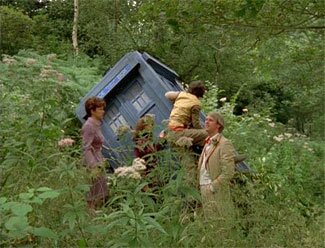 After finding the healing Zero Room, the Doctor spends enough time there to rally and then emerges, makes his way back to the console room and successfully executes a plan to save the TARDIS by jettisoning some of its rooms in order to gain momentum to escape the "hydrogen in-rush." One of the rooms lost in the maneuver is the Zero Room, which the Doctor needs to recover from his rocky regeneration. Luckily, Tegan learns from the TARDIS computer that certain locations have soothing and healing properties that are as good or better than the Zero Room, one of these being the serene city of Castrovalva. There’s no time to lose, as the Doctor’s condition is getting worse. After finding the healing Zero Room, the Doctor spends enough time there to rally and then emerges, makes his way back to the console room and successfully executes a plan to save the TARDIS by jettisoning some of its rooms in order to gain momentum to escape the "hydrogen in-rush." One of the rooms lost in the maneuver is the Zero Room, which the Doctor needs to recover from his rocky regeneration. Luckily, Tegan learns from the TARDIS computer that certain locations have soothing and healing properties that are as good or better than the Zero Room, one of these being the serene city of Castrovalva. There’s no time to lose, as the Doctor’s condition is getting worse.
The crew arrives at Castrovalva and while things seem to improve for the Doctor, something still isn’t right. His regeneration sickness is subsiding but there’s something wrong with the the city itself. It causes people to go around in circles, to head one way only to end up in going in the opposite direction, walking down stairs leads to the second floor and vice versa. It’s as if the city is folding back in on itself like some crazy Escher print. Of course, the Master has to have something to do with it. It’s not enough that 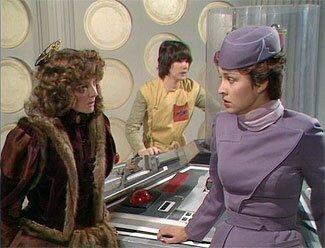 he killed the Doctor and caused his regeneration in the previous adventure. The Master can’t leave well enough alone. The temptation to hit the Doctor at his weakest is just too compelling. he killed the Doctor and caused his regeneration in the previous adventure. The Master can’t leave well enough alone. The temptation to hit the Doctor at his weakest is just too compelling.
Castrovalva is a transitional adventure. The best of the Davison era is yet to come but there are hints of the direction the show will take in Castrovalva. The real genius of the adventure is that it makes the Doctor a secondary character for the first two thirds of the story, allowing the audience to get comfortable with the new slate of companions. It gives them a little time to shine before the Doctor’s new persona is fully formed. It’s a subtle and effective way to bring the audience along and ease the transition between Doctors.
Castrovalva also succeeds in terms of the economy of the story. The previous two episodes, The Keeper of Traken and Logopolis were convoluted affairs with more twists and turns than normal. Castrovalva allows everyone to catch their breath by delivering a straightforward character and atmosphere driven story. It’s enough to ask an audience to throw in with a new Doctor and new companions without piling on a gothic narrative. But Castrovalva is more than filler. It’s the culmination of a three-adventure arc surrounding the machinations of the Master. Unfortunately for the Doctor’s archenemy, everything comes to a head just as the Doctor regains complete control of his faculties.
 Video Presentation Video Presentation
Castrovalva was in fair condition when the Restoration Team set about re-mastering it for this release. The studio footage, shot on videotape needed a nominal amount of restoration work but the location footage, shot on film, was badly degraded. The Restoration Team went back to the original negatives for the location scenes struck new prints and completely re-cut and remastered them to bring in correct color fidelity, image clarity, contrast and saturation. As with so many of the Doctor Who adventures the video in this release looks significantly better than it did when the episodes first aired in the 1980s.
Audio Presentation
Unlike Logopolis and The Keeper of Traken, the audio for Castrovalva was in reasonable shape. Major improvements were made though in the reduction of background noise, tape hiss and inconsistent levels. Nearly every one of the episodes worked on by the Restoration Team end up sounding a lot better than the original broadcast versions simply because of the significant advances that have been made in audio editing technology since the shows were produced.
 Extras Extras
Castrovalva includes more ancillary content than you can shake a stick at:
Audio Commentary with actors Peter Davison and Janet Fielding, writer Christopher H. Bidmead and director Fiona Cumming. – This good natured commentary isn’t exactly packed with insights but it is fun to listen to Davison and Fielding reminisce about their early Doctor Who collaboration. Christopher H. Bidmead offers some insight on his writing process and his inspiration for Castrovalva while Fiona Cumming throws in a comment or two from time to time about her experiences directing the episode.
Featurette: Being Doctor Who (13 minutes) – In this short featurette Peter Davison explains how he got the role of the Doctor, how it impacted his career and how he put his own mark on the role. It covers his entire tenure as the Doctor from Tom Baker’s departure to Davison’s regeneration into Colin Baker. The contemporary interview is intercut with a fair amount of interesting behind-the-scenes video.
Feaurette: The Crowded TARDIS (11 minutes) – The relatively large number of companions at the outset of the Davison years was not unique in the history of Doctor Who but it did present certain logistical and dramatic challenges. This featurette explains why the writers chose to pack the TARDIS with passengers and why they eventually reverted to a single companion by the end of Davison’s run.
Featurette: Directing Castrovalva (11 minutes) – Fiona Cumming seems a lot more forthcoming in this interview feature where she discusses the various dramatic and artistic choices made in the direction of Castrovalva than she does on the audio commentary.
The Swap Shop and Blue Peter with Peter Davison (29 minutes) – If you’ve seen any of the other Doctor Who DVDs it’s likely that you’ve seen clips from Blue Peter and The Swap Shop. These clips are taken from Davison’s first press junket promoting his new Doctor. The segments are probably more interesting for the funky period clothing than they are for any particular insight Davison offers. After all, at this stage he hadn’t made even asingle adventure so most of his comments are very general.
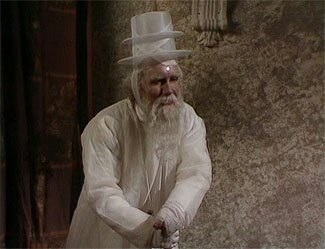 Theme Music Video – This is a 5.1 remix of the Davison era theme music for the show. The Doctor Who theme is easily one of the most iconic of TV themes ever written and this extended remix is a nice treat. Theme Music Video – This is a 5.1 remix of the Davison era theme music for the show. The Doctor Who theme is easily one of the most iconic of TV themes ever written and this extended remix is a nice treat.
Music Only Option – As the name implies, this is an option to watch the episodes with out dialogue and sound effects.
Popup Production Notes – Once again the BBC includes an extensive set of popup trivia screens that go into enough detail to satisfy even the most hardcore fan.
Trailers and Continuity Announcements – These are the BBC intros and outros for each of the four episodes in Castrovalva. They’re interesting historic artifacts that round out a comprehensive collection of archival materials.
Photo Gallery – Another pre-packaged video presentation of behind the scenes, promotional and publicity stills with accompanying sound track made up of excerpts from Castrovalva’s incidental music. I like to have the option to step through this kind of photo gallery manually but that’s a minor gripe.
DVD-ROM Features – Inserting this disc into a DVD-ROM drive in a computer gives you access to the 1982 Doctor Who Annual and PDF versions of the Radio Times listings for each of the four episodes. These are lots of fun to browse. You get a feeling of 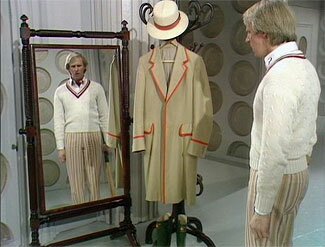 nostalgia looking at them even if you weren’t a kid back when the episodes originally aired. nostalgia looking at them even if you weren’t a kid back when the episodes originally aired.
Conclusion
Though Davison is absent for a good chunk of his first adventure, Castrovalva still a great maiden voyage for his Doctor. It’s a welcome pause between the end of Baker’s run and the classic Davison adventures that were to come. As usual, the Restoration Team has done an outstanding job, giving us top-notch video and audio along with an impressive selection of extras. If you’re a long time Davison fan or new to classic Doctor Who, Castrovalva has plenty to offer.
|