|
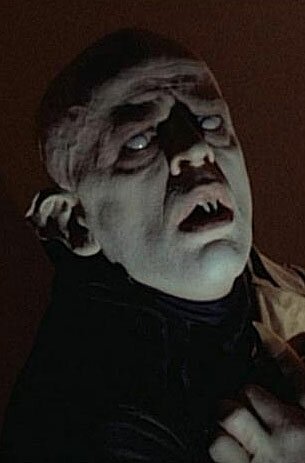 Dracula. Dracula.
The name alone conjures images of bats, fog-strewn moors, coffins and castles. There is so much baggage attached to the name that it is impossible not to immediately picture him in your mind. Most people will probably picture Bela Lugosi with his piercing eyes and thick accent. “Velcome.” Others may imagine the imposing figure of Christopher Lee’s Dracula. Others may picture the mustachioed madman on whom Bram Stoker’s novel is loosely inspired.
His origin is relatively inauspicious: an occasionally powerful, yet lurid and melodramatic novel from a pretty shitty 19th Century author who went on to do nothing else of note. He’s not even the first vampire to be popularized; Thomas Preskett Press’ (a.k.a. James Malcolm Rymer) Varney the Vampire predates Stoker’s novel and by most accounts was just as popular. And yet Dracula has stayed in the public consciousness while other vampires before and after have faded away.
 |
What is it about Count Dracula that has made him such an indelible figure in western culture? Perhaps it’s the lure of forbidden sexuality; the sexual subtext of Stoker’s novel is just barely subtext, with blood drinking a stand in for fluid swapping of another sort. I’m sure that’s part of it, but since Stoker’s novel, sexual mores have become increasingly more lenient (in fact, one could make an argument that novels like Dracula were a contributing factor to the increased sexual openness). If that were the only reason, Dracula probably would have faded into obscurity. Or maybe people are attracted to the idea of immortality and all that entails. That’s certainly an alluring concept. Or maybe it’s the kernel of truth in Stoker’s novel; there was a historical Dracula called Vlad the Impaler, though he bears little resemblance to Stoker’s vampire. The fact that a Romanian warrior named himself “Dracula” adds just a bit of plausibility to a story that must have been hard to swallow for the readership of the time. Most likely it’s a mix of all those factors, and others as well, that have kept Dracula undead and kicking for so long.
From books, to clothes, to the best goddamned cereal ever made, to music and the whole Gothic subculture, in a little over 100 years Dracula has left an impression on western civilization as pervasive as any figure, fictional or otherwise, excepting maybe Jesus Christ (they both rise from the grave, except Dracula can have sex and turn into a bat, which is much cooler than the whole water into wine deal). That’s a pretty lofty accomplishment for a character from a 19th century “penny dreadful.”
However, Dracula’s biggest mark has probably been on the cinema where, for nearly 100 years, filmmakers have been telling, retelling, reinterpreting and re-imagining the story in countless versions, from vampire teens to vampire dogs. Although a large percentage of these films have been pure shit, they don’t seem to have dulled our appetite for stories of vampirism one whit.
With so many Dracula and vampire themed films coming out at such a steady pace, it’s easy to overlook some small gems, or to forget about old favorites. With that in mind, here are my picks for the 13 Dracula films you NEED to see. I can’t say that I unequivocally love all of them, but I feel each choice offers something unique and worthwhile. Serious students of vampire mythology or horror cinema will find something of value in each film here.
 Nosferatu (1922) Nosferatu (1922)
Probably the earliest extant adaptation of Stoker’s novel was almost lost forever due to a copyright lawsuit by Stoker’s widow. Luckily this unauthorized adaptation survived, for not only is it one of the best Dracula adaptations, it’s a hallmark of German expressionist cinema. Though it’s unlikely to frighten today’s jaded viewers, there are still moments of genuine creepiness. Its innovative lighting and misè en scène is still influencing filmmakers today, probably most explicitly Werner Herzog, who directed a remake in 1979 (if you want to get technical, he directed two remakes in 1979, one in German and one in English, each with it’s own subtle nuances). The remake is one of the most visually stunning films in the horror genre and both versions are required viewing.
 Dracula (1931) Dracula (1931)
Universal’s first Dracula film is a pretty obvious choice, but nevertheless essential considering that it’s probably the most influential portrayal of Dracula. I’ve always found Lugosi’s performance to be hammy and overcooked; ditto for Edward Van Sloan as Professor Van Helsing. Director Tod Browning does create some haunting images, though, especially in the opening Transylvania castle scenes. However, once the action movies to London, the film’s power is severely drained. Browning’s true masterpiece would come two years later in the form of Freaks, a film that pretty much ended his career. Pity.
Dracula (1958 – a.k.a. Horror of Dracula)
Tame by today’s standards, Hammer’s sophomore horror entry was frightfully grisly in 1958. Loaded with blood, heaving bosoms and sets you will see recycled in many Hammer films to come, the staginess of the direction (the film is almost entirely studio bound) is overcome by the creative visual design and, of course, the performances of horror legends Peter Cushing and Christopher Lee. This film cemented their status as horror icons, and gave rebirth to interest in the classic characters of Van Helsing and Dracula. It was followed by a spate of sequels good (Dracula Has Risen from the Grave), bad (Dracula 1972 A.D.) and indifferent (Dracula: Prince of Darkness). The original is still the best. A classic monster movie.
The Fearless Vampire Killers or, Pardon Me, But My Teeth Are In Your Neck (1967)
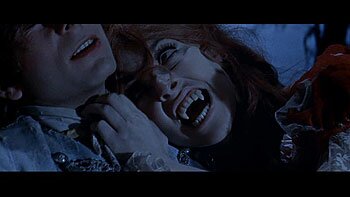 Roman Polanski’s Fearless Vampire Killers is a film probably best appreciated by those familiar with the Hammer style of filmmaking or those with an off beat sense of humor. Consider it the best Hammer film not actually made by Hammer. It’s a comedy, but not of the laugh out loud variety, and its tone can be off-putting to some. There’s still a lot to appreciate here even if you don’t dig the humor: the production design is top notch, Krystofer Komeda’s score is haunting and whimsical, and the gay subtext is actually quiet amusing. It also includes one of the few significant screen appearances by Polanski’s then wife-to-be (and eventual Manson murder victim), the radiant Sharon Tate. The climactic costume ball was ripped off by the recent cinematic abomination Van Helsing but, as one would expect from comparing Stephen Sommers to Roman Polanski, Polanksi’s version kicks Sommers’s ass. Roman Polanski’s Fearless Vampire Killers is a film probably best appreciated by those familiar with the Hammer style of filmmaking or those with an off beat sense of humor. Consider it the best Hammer film not actually made by Hammer. It’s a comedy, but not of the laugh out loud variety, and its tone can be off-putting to some. There’s still a lot to appreciate here even if you don’t dig the humor: the production design is top notch, Krystofer Komeda’s score is haunting and whimsical, and the gay subtext is actually quiet amusing. It also includes one of the few significant screen appearances by Polanski’s then wife-to-be (and eventual Manson murder victim), the radiant Sharon Tate. The climactic costume ball was ripped off by the recent cinematic abomination Van Helsing but, as one would expect from comparing Stephen Sommers to Roman Polanski, Polanksi’s version kicks Sommers’s ass.
Page 1 | Page 2 | Next >
|