|
26 seasons.
Just think about that for a minute. 26 years worth of programming. Sure, there was a pause in the mid-80s, but (in the UK) every year, for 26 years, there was some form of Doctor Who was on television.
That’s really impressive. How many shows lasted more than 26 years, or even come close? I’m not going to look, but I do know that it made Doctor Who the longest running sci-fi program in the history of television, so much so that it earned a spot in the Guinness Book of World Records.
How do you sendoff a show that has been running that long?
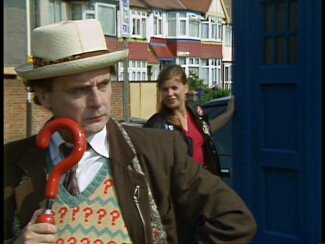
Unfortunately, the creative team didn’t know that cancellation was coming in the way that it did. Despite a time-slot change from Saturdays to Tuesday nights opposite incredibly popular programming and a resulting nosedive in ratings, Doctor Who viewers were continuously assured that the adventures of the Seventh 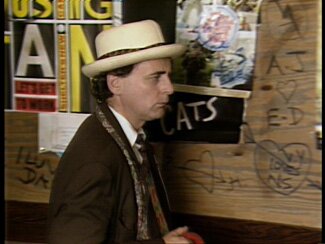 Doctor (Sylvester McCoy) would continue on for a fourth year. So no real sendoff was ever planned, and as a result, on December 6th, 1989, BBC viewers watched the transmission of the final episode of the three-part story Survival – and were no doubt left unfulfilled. Doctor (Sylvester McCoy) would continue on for a fourth year. So no real sendoff was ever planned, and as a result, on December 6th, 1989, BBC viewers watched the transmission of the final episode of the three-part story Survival – and were no doubt left unfulfilled.
The 159th (!!) story is an adventure in which the Doctor takes his companion Ace (Sophie Aldred) back home to Perivale. But in typical Who fashion, something is very amiss. Most of Ace’s degenerate mates have disappeared. As Ace trollops around the town discovering this fact, the Doctor notices some odd behavior with the many stray cats around the city, and he sets out to investigate if there is a connection between them and the disappearances. Ace, saddened that she hasn’t found most of her friends, walks through a park playground where she spots a black cat. As she walks closer to the cat, the cat takes off and Ace is attacked by a Cheetah Person who transports her back to their home planet. It is here that she meets some of her old friends who have met with a similar fate. It seems that the Cheetah People are hunting, killing and eating them much in the way Earth cats torment their prey.
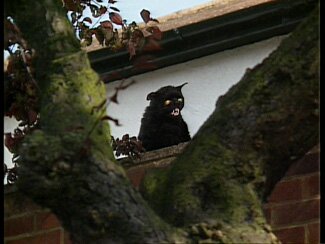 It isn’t long after her arrival that the Doctor and a public defender named Paterson (Julian Holloway) also get transported to the Cheetah Planet while chasing after a stray. They end up right in the base camp of the Cheetah People to find that among them is the Doctors old arch nemesis, the Master (Anthony Ainley) who is slowly beginning to turn into a Cheetah Person himself. It seems an attribute of the planet, that the longer you stay, you gradually become part of the tribe itself, and acts of aggression only make the process quicker and more permanent. As the story progresses, one of Ace’s friends kills a cheetah person and in losing his humanity allows the Master a way to get back to Perivale where he hopes again to rule the world and destroy the Doctor. Ace, meanwhile, attempts to save an injured Cheetah Person named Karra (Lisa Bowerman) and is welcomed into the tribe as a sister to the felines, a situation that Ace is enjoying too much to want to leave. It isn’t long after her arrival that the Doctor and a public defender named Paterson (Julian Holloway) also get transported to the Cheetah Planet while chasing after a stray. They end up right in the base camp of the Cheetah People to find that among them is the Doctors old arch nemesis, the Master (Anthony Ainley) who is slowly beginning to turn into a Cheetah Person himself. It seems an attribute of the planet, that the longer you stay, you gradually become part of the tribe itself, and acts of aggression only make the process quicker and more permanent. As the story progresses, one of Ace’s friends kills a cheetah person and in losing his humanity allows the Master a way to get back to Perivale where he hopes again to rule the world and destroy the Doctor. Ace, meanwhile, attempts to save an injured Cheetah Person named Karra (Lisa Bowerman) and is welcomed into the tribe as a sister to the felines, a situation that Ace is enjoying too much to want to leave.
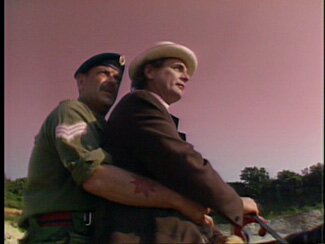 Survival isn’t necessarily a bad story, as such, but it certainly has its fair share of flaws. Darwinian elements are scattered throughout the story with “Survival of the fittest” being referred to more than once, and it is particularly poignant considering the “pack” mentality of the Cheetah People, as well as the youth culture of which Ace was a part. The scripts non-violent approach is also a message that can’t help but be noticed. Ace chooses to save her attacker rather than let her die. The Doctor of course, refuses to fight the Master, not only for fear of bonding permanently with the planet, but because he rises above the darker part of himself. The “animal within” is a huge part of the Survival story and a large inspiration, particularly with the teenage youth gangs to the point that one could draw similarities and inspiration from The Lord of the Flies. It’s a solid story, but with being only three episodes, each less than a half-hour long, I feel that it’s a bit rushed. Another episode would have really benefited the serial and elevated it to something much better with supporting characters more fully developed. Survival isn’t necessarily a bad story, as such, but it certainly has its fair share of flaws. Darwinian elements are scattered throughout the story with “Survival of the fittest” being referred to more than once, and it is particularly poignant considering the “pack” mentality of the Cheetah People, as well as the youth culture of which Ace was a part. The scripts non-violent approach is also a message that can’t help but be noticed. Ace chooses to save her attacker rather than let her die. The Doctor of course, refuses to fight the Master, not only for fear of bonding permanently with the planet, but because he rises above the darker part of himself. The “animal within” is a huge part of the Survival story and a large inspiration, particularly with the teenage youth gangs to the point that one could draw similarities and inspiration from The Lord of the Flies. It’s a solid story, but with being only three episodes, each less than a half-hour long, I feel that it’s a bit rushed. Another episode would have really benefited the serial and elevated it to something much better with supporting characters more fully developed.
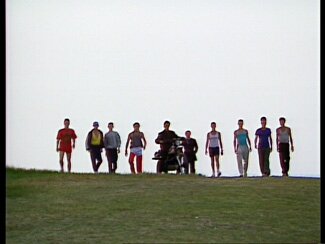
 For being such a stellar script, nothing on the screen seems to support it very much. Granted, the direction is okay, but outside the principle actors, most of the supporting cast is horrid. This goes for all of Ace’s friends, including Midge (William Barton) the boy who ends up under the Master’s hypnosis. Upon his return to Perivale, Midge goes to a survival class and convinces them to follow him in fighting the Doctor. How does he present himself to do that? He dons a jacket with shiny sleeves and some cheap, corner store sunglasses. Not cool or convincing, even for 1989, but it somehow works well enough on these mute unnamed characters that have nothing at all to say or do in the story. For being such a stellar script, nothing on the screen seems to support it very much. Granted, the direction is okay, but outside the principle actors, most of the supporting cast is horrid. This goes for all of Ace’s friends, including Midge (William Barton) the boy who ends up under the Master’s hypnosis. Upon his return to Perivale, Midge goes to a survival class and convinces them to follow him in fighting the Doctor. How does he present himself to do that? He dons a jacket with shiny sleeves and some cheap, corner store sunglasses. Not cool or convincing, even for 1989, but it somehow works well enough on these mute unnamed characters that have nothing at all to say or do in the story.
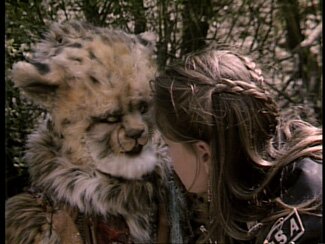
That said, the biggest threat that the Doctor and Ace have to face in Survival has to face is the BBC’s budget for the show. If not for the half-way decent story, there is absolutely nothing convincing here. The cats found on the streets of Perivale are peculiar to the Doctor. They should be peculiar to the audience as well because the obviously animatronic cats move in as very un-catlike a fashion as possible and the screencaps of the cheetah people speak for themselves. The fur coats and awful headpieces the actors had to wear make them look more like Disney Safari Cruise actors as opposed to anything resembling menacing. Plus, calling them “Cheetah People” without giving them a non-Earth based name (Karra aside) really doesn’t distinguish them in any shape or form. Giving a name like the Daleks, the Zarbi or the Sontarans give a sense of discovery and the unknown to the viewer. Call them “Cheetah People” and the audience is going to have a preconceived silly image in their head – one represented precisely in line with what made it on screen. Perhaps the original intention was to thematically keep the animals/pack mentality, and as such not give the race a name, but for me, it just didn’t work.
 So after 26 years, this is what viewers got; a well scripted story, with less-than average acting and barrel-bottom effects. It hardly seems fair to Doctor Who’s viewing audience which at this point had already spanned generations. When it became obvious in post-production that the chances for the 27th season were slim, a lovely voice-over was made to be played over the final scene. It’s a wonderful bit by McCoy assuring viewers (and Ace) that there are still adventures to be had and “work to do.” It’s a pity that it didn’t include Sylvester McCoy who only returned briefly at the beginning of the 1996 television movie. It’s even more a pity that it took a 15 year hiatus to get Doctor Who back on the air. So after 26 years, this is what viewers got; a well scripted story, with less-than average acting and barrel-bottom effects. It hardly seems fair to Doctor Who’s viewing audience which at this point had already spanned generations. When it became obvious in post-production that the chances for the 27th season were slim, a lovely voice-over was made to be played over the final scene. It’s a wonderful bit by McCoy assuring viewers (and Ace) that there are still adventures to be had and “work to do.” It’s a pity that it didn’t include Sylvester McCoy who only returned briefly at the beginning of the 1996 television movie. It’s even more a pity that it took a 15 year hiatus to get Doctor Who back on the air.
All things considered though, while Survival is far from perfect, the final episodes of Doctor Who were very strong. Battlefield, the excellent Ghost Light and The Curse of Fenric are all worth watching, and watching often. Survival was a nightcap on the series but at least owing to its great script, it goes down smooth and remains a must for all fans to see.
 The DVD Presentation The DVD Presentation
Although being the very last (and by default most recent) of the classic Doctor Who episodes, the Doctor Who Restoration Team has once again created a transfer of exceptional quality. Further explanation about the process and minutiae of achieving this success can be found here. There is one downfall to such a brilliant transfer, which is that it shows every poor special effect with increased detail, but that’s just nitpicking. For the audio, both the broadcast Stereo mix, as well as a newly created 5.1 Surround mix are included. The 5.1 mix, while well done (seriously, well done) seems kind of an overkill since the show really wasn’t intended for a surround mix. It’s still a welcome addition, and purists who rather have the original Stereo mix they remember will be happy to have a clean inclusion. As usual, it’s a wonderful package, even if Survival itself isn’t very impressive. English language subtitles are thoughtfully included.
And the Extras Are?
Audio Commentary with actors Sylvester McCoy and Sophie Aldred and script editor Andrew Cartmel –
I am consistently impressed with the quality of the Doctor Who series commentary tracks. Every single DVD release has had one and they’ve all been worth a listen. Survival’s commentary is also fantastic. The three participants are rarely at a loss for words, and the comments range from the program, to the awful effects, to the political state of England under Thatcher as well as the political state now. At one point during the opening credits of part three, Mr. Cartmel even states that they should talk over the opening sequence so that the DVD purchasers get their money’s worth. Another five-star commentary.
Audio Commentary with Clayton Hickman (Doctor Who Magazine editor) and winners of a recent Doctor Who Magazine contest (on Episode 3)–
I had very serious doubts about the value of this commentary, but I had a blast listening to it. Two male and one female (who was only a year old when it originally aired) are given the opportunity to free-form discuss the very final episode of Doctor Who and they use it to talk about a wide range of things from the silly fashions to the awful effects to memories of the show they had growing up. I especially liked one of the winners mocking of the Master by saying. “I rather wish I made one of those Castrovalva things instead of relying on a bunch of Youth Club kids.” It’s not vital to listen to this track, but it certainly adds an insightful and often humorous view on this episode and the series.
 Isolated Score – Isolated Score –
A lot of fans feel that Dominic Glynn’s guitar heavy music used in Survival was a strong point. Personally, I don’t that it was exceptionally moving in one way or another. However, it is nice that they included an isolated score in order for those loving fans to be able to hear it free of intruding sound effects and dialog.
Information Text –
This feature takes the place of a subtitle track and provides all sorts of interesting information, technical detail, cast tidbits, script alterations, television ratings, etc. It’s a great feature to run while you have one of the commentaries running for an extra dose of Who information.
“Cat Flap” Featurette, Part 1 – (28:05)
The documentary on Survival is included as two separate parts. Sylvester McCoy and Sophie Aldred are, of course, present talking about the script and their feelings on it. A surprising number supporting cast were able to of the crew are involved as well which provides a great insight with the process of their selection and what it was like to be part of Doctor Who’s final story. The main problem that exists with Survival’s story is with the costumes. They are simply too cheesy for such a serious story, and thankfully this is addressed as well. Lisa Bowerman, the actress that played the main Cheetah Person that Ace befriends talks at length about the issues and impracticality of the costumes, and there is really no one more qualified. As soon as you see the story you’ll know why.
“Cat Flap” Featurette, Part 2 – (33:57)
I don’t know why the producers felt the need to split the Cat Flap feature into two parts, but this second part does cover completely different ground than the first. This part deals more with the actual shooting of Survival. The actors who played the Cheetah People had incredible difficulties acting in the 100+ degree heat. The animatronics team couldn’t create a decent animatronic cat to save their lives. Sophie Aldred, even in her final story, doesn’t get to ride a motorcycle, despite that being the reason she was hired for Doctor Who. Sylvester McCoy’s contacts got sand underneath them during the fight scene with the Master. Every single possible problem that can occur did, and this documentary explains how filming Survival was akin to fighting for survival. It’s actually more interesting than the story itself.
Deleted and Extended Scenes – (9:18)
To be fair, this feature isn’t really nine minutes of deleted or extended scenes so much as it is before and after effects shots often split-screened to show the drastic changes made in post-production. Some fans will find this interesting, but I was disappointed with the lack of truly additional or revealing material.
Outtakes – (16:26)
A nice collection of little on-set recording flubs is included here. The set runs a little long, but fans of outtakes aren’t likely to notice or care.
Continuities – (3:04)
A standard feature on Who DVDs, these lead-in and lead-out ads from the BBC for the individual episodes of Survival show how the show was advertised. It also interestingly enough tells you who was appearing on Wogan and what detective Bergerac was doing that evening.
Photo Gallery – (8:38)
A collection of a whole lot of photos taken from the production of Survival. Witness the publicity stills from the end of the era.
Radio Times Listings (DVD-ROM) –
With a capable computer, you can access the Radio Times listings for each of the three Survival chapters, as well as a publicity image of a caricature of Sylvester’s Doctor and Ace. Most interesting though, is the letters column reproduction with letters from Who fans distraught that Doctor Who was being cancelled. Sadly, it took sixteen years to truly resurrect, unlike Peter Cregeen, Head of Series at BBC, promises the Radio Times readers.
All of the remaining features are included on the second disc.
“Endgame” Documentary – (44:20)
If there was ever a more fascinating documentary on any Doctor Who DVD, I don’t recall it. Endgame discusses in no small detail the direction that the writing staff of Doctor Who’s 25th-26th season were trying to take the show in. They wanted to make the Doctor a deity to the Gallifreyans and more than just a Time Lord. Sylvester McCoy was very much behind this change in direction, and clues were peppered throughout those seasons. Sadly, following Survival, Doctor Who was cancelled in its tracks and this direction was never followed up on. Many of reasons are given for this. Doctor Who was placed on the air against Coronation Street, the BBC’s most popular program at the time. The staff at the BBC didn’t like science-fiction. Ratings plummeted. But thankfully, Endgame doesn’t sit solely as a memoir as to what went wrong. Instead, it spends a great deal of time with the plans in store for the ill-fated 27th season. Ever wonder what would have been in store for the Doctor? What happens to Ace? Would there be new companions? Would Sylvester still be the Doctor? What kind of stories were in place? The fun in the speculation and listening to the creative staff wax nostalgically about all their ideas is fantastic. This is an absolute must see.
“Search Out Science” – (19:19)
I’m not certain as to what the origins of this program are, but it appears to be an educational program for youngsters. The Doctor here hosts, The Ultimate Challenge, a game show that pits the viewer against the intelligence of Ace, K-9 and an alien named Cedric from the planet Glurk. Hardly “ultimate” it asks of its contestants questions like “What shape is the Earth?” but in defense of its simple nature, it does spend time discussing correct and incorrect answers to explain to the audience the whys. This piece is only of slight interest, but it is great to hear John Leeson voice K-9 one last time (until the new series).
“Little Girl Lost” Documentary – (16:33)
This documentary examines the character of Ace, her origins as a character, and the selection of Sophie Aldred to play the part. Ace was in interesting character in terms of Doctor Who’s companions, because her character really does develop throughout her adventures. This documentary examines all of her stories, which might help newer viewers since, aside from Survival, only three of her adventures are on DVD.
“Destiny of the Doctors” video footage – (13:50)
In the late 90’s, right after the Doctor Who television film was made, a CD-ROM video game was released called Destiny of the Doctors. As common for computer games of the era, it featured FMV clips of real actors. In this game, actor Anthony Ainley reprised his role as the Master for the very last time and this feature is a collection of all his filmed interludes for the game. Taken on their own, they really aren’t much except bits of Ainley hamming it up. I imagine that they might create more of an impact watching them during a normal playthrough.
Survival isn’t a great Doctor Who serial, but the extras on this DVD more than does the story and program the justice it deserves.
The Bottom Line
Survival is not the series ending swansong that fans of Doctor Who expected or wanted. It’s an ambitious story that would have been better served with a fourth episode and better special effects. However, this DVD release certainly puts the serial, as well as the season and the final years of Doctor Who in a completely different light. Even people that weren’t fond of the McCoy adventures will probably find the supplemental features fascinating and worthy of purchase. For that reason alone, an otherwise skippable story comes with a high recommendation. It’s a near-perfect DVD.
|